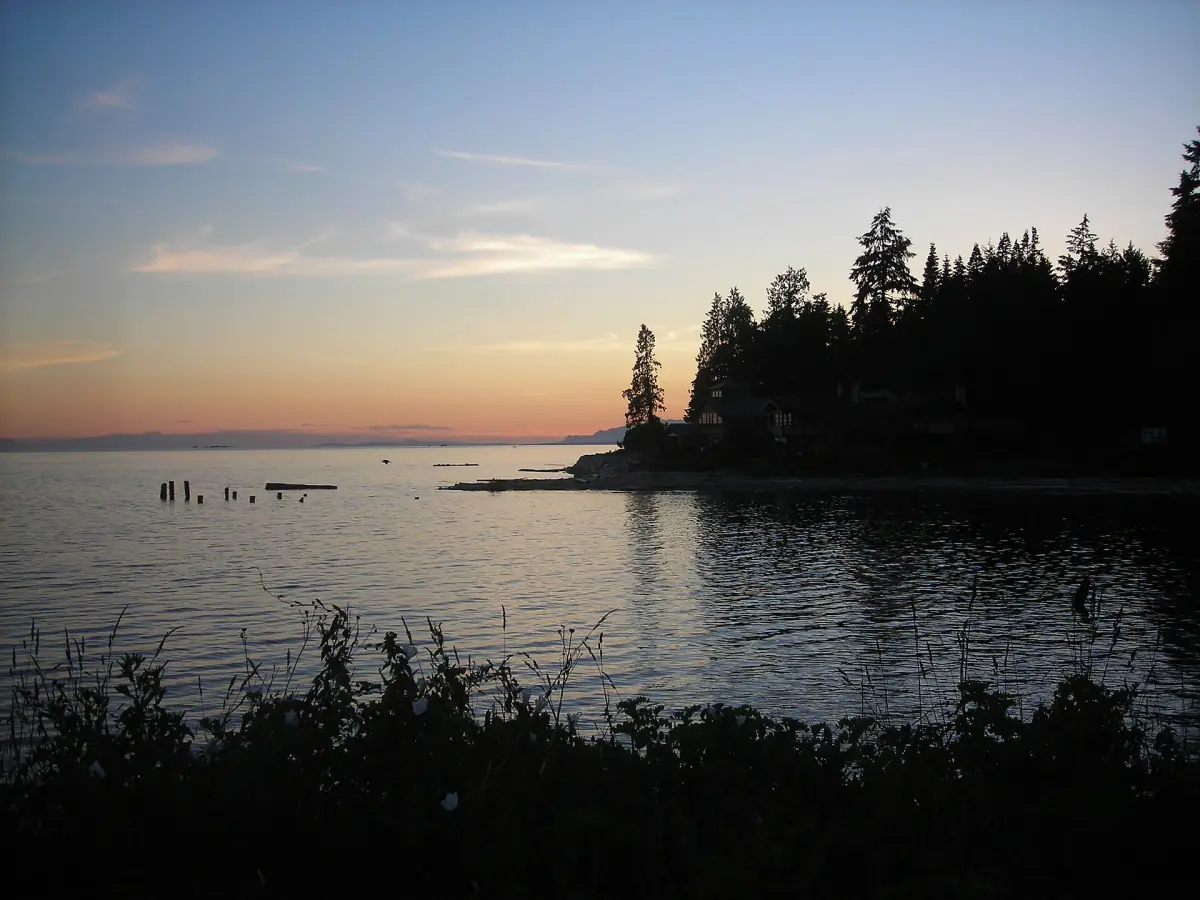
Sunshine Coast weather in a few lines
The Sunshine Coast has a mild, wet coastal climate. Summers are warm and fairly dry, winters are cool and rainy. The numbers on this page are averages for the Vancouver Harbour weather station from 1991 to 2020. They give a reliable picture of the season, but they are not measurements from Roberts Creek, Gibsons or Sechelt, and they are no substitute for a forecast on the day you travel.
If you plan a day on the water, check the weather before you book. A boat trip from the city is the plan most tied to the season, so read the notes on whale watching tours from Vancouver before you book.
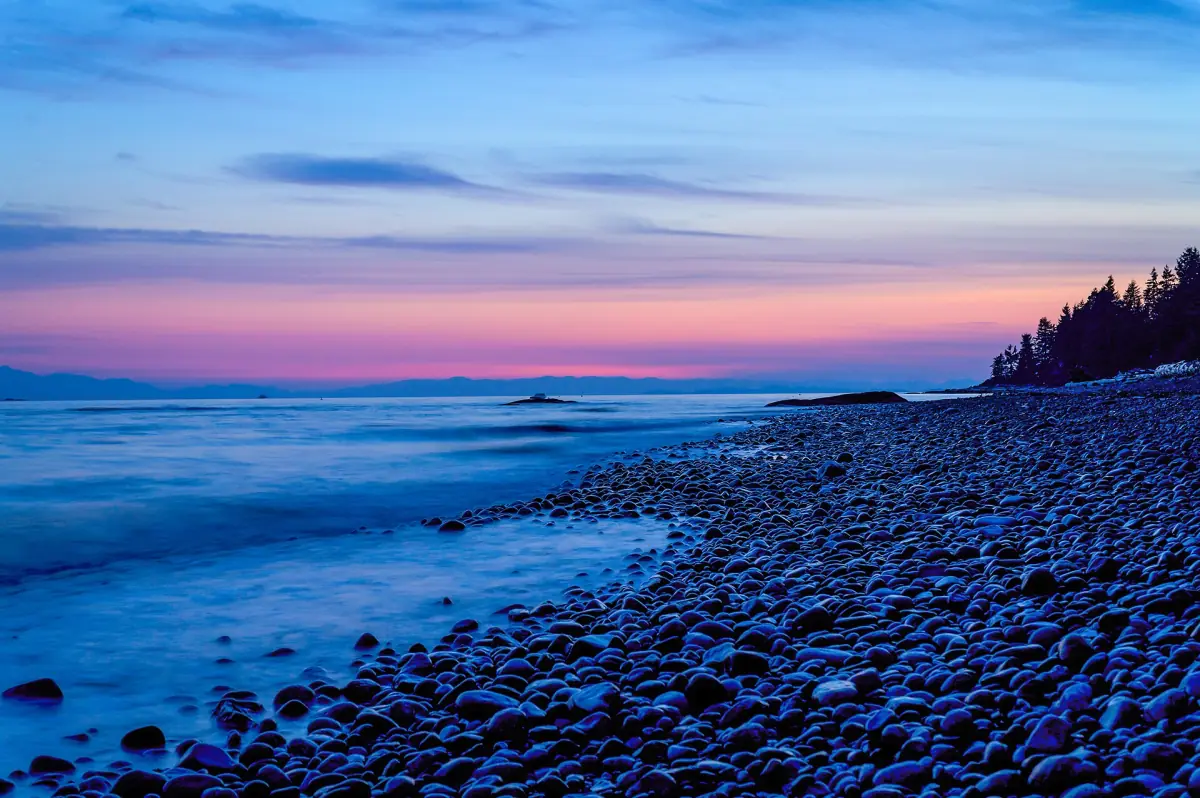
Monthly temperatures and rainfall
Averages for the Vancouver Harbour station, 1991 to 2020.
| Month | Average high | Average low | Rainfall | What to expect |
|---|---|---|---|---|
| January | 7.4 °C | 3.3 °C | 236.6 mm | Cool and wet |
| February | 8.4 °C | 3.3 °C | 117.0 mm | Cool, less rain |
| March | 10.5 °C | 4.6 °C | 162.5 mm | Cool and wet |
| April | 13.9 °C | 6.9 °C | 117.7 mm | Mild, showers |
| May | 17.8 °C | 10.2 °C | 72.6 mm | Mild, much drier |
| June | 20.2 °C | 12.8 °C | 65.7 mm | Warm, dry |
| July | 23.0 °C | 14.9 °C | 43.5 mm | Warmest, driest |
| August | 23.0 °C | 14.8 °C | 48.6 mm | Warmest, dry |
| September | 19.4 °C | 12.1 °C | 71.4 mm | Warm, still dry |
| October | 13.9 °C | 8.6 °C | 156.8 mm | Rain returns |
| November | 9.7 °C | 5.3 °C | 245.2 mm | Wettest month |
| December | 7.1 °C | 3.2 °C | 199.9 mm | Cool and wet |
Temperatures are the average daily maximum and minimum. Rainfall is the average monthly total. The rainfall series has a few missing years, so treat it as a guide and not as an exact record. For most visitors, July and August are the best months. June and September are cooler but stay clearly drier than the stretch from October to March.
Tours from Vancouver and the Sunshine Coast
Boat trips, seaplane flights and day trips from Vancouver, with live prices and availability.
Best time to visit Roberts Creek by season
What each part of the year suits.
Summer, June to September
The warmest and driest stretch, and the best window for the pier and the beach, a hike or a day on the water. If you travel by car, read the ferry guide first and consider a reservation.
Spring, April and May
Temperatures rise from 13.9 °C to 17.8 °C on average, and May already has far less rain than April. It suits forest walks and quiet days at the coast.
Autumn, October and November
Rainfall climbs from 156.8 mm in October to 245.2 mm in November. Bring waterproof layers and keep a flexible plan for outdoor days.
Winter, December to March
Highs stay between 7.1 °C and 10.5 °C and the months are wet. It is a time for cosy stays and short walks, so look at where to stay before you go.
Weather tips for your trip
Small points that save a wasted trip.
Clocks. Since 8 March 2026 British Columbia stays on daylight time all year, and clocks do not go back on 1 November 2026. Tide and ferry times in November and December therefore stay on the same clock as in summer. Do not subtract an hour from times you read on older pages.
Tides at the rapids. Weather does not set the viewing times at Skookumchuck Narrows. The tide does. Look up the viewing times for your day and arrive early.
Fires. Campfire rules differ by park and by local authority and can tighten in dry spells. Check the current rule before you light a fire.
Layers. Even in July and August the average low is about 15 °C, so pack a warm layer for evenings.
Sunshine Coast weather: frequently asked questions
What is the best month to visit Roberts Creek?
July and August are warmest and driest, with average highs of 23.0 °C. June and September are good alternatives if you prefer milder days.
How much does it rain on the Sunshine Coast?
The yearly average at the Vancouver Harbour station is 1,537.4 mm. Most of it falls from October to March, and November averages 245.2 mm.
Are these figures for Roberts Creek itself?
No. They come from the Vancouver Harbour station and show the typical pattern of the region. Local conditions on the coast can differ, so check a forecast shortly before you travel.
Do the clocks change in November 2026?
No. British Columbia stays on daylight time all year since 8 March 2026, so there is no change on 1 November 2026.
Is this the official weather service?
No. This is an independent travel guide and is not connected to any weather service, park authority or ferry company. Use a current forecast for decisions on the day.